Layering gemstone necklaces can make even a familiar piece feel different. Start with a necklace you already love, then introduce a second length, a quieter pendant, or a simple metal chain. The goal is not to wear more jewelry, but to give each piece enough space to contribute its own color, texture, and shape.
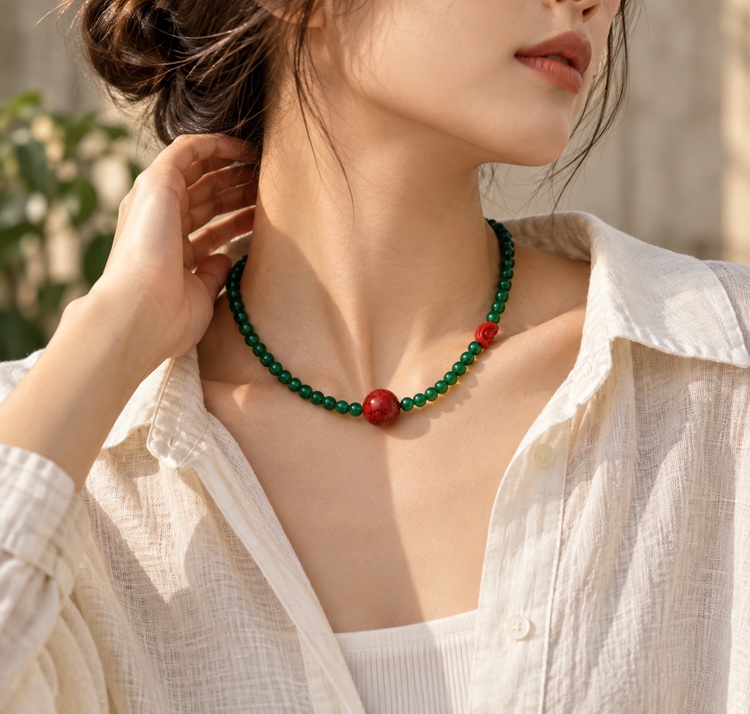
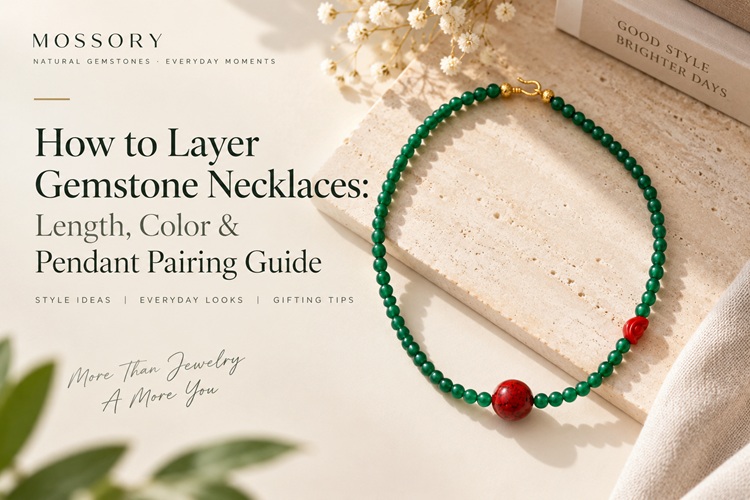
The Eastern Heritage · Green Agate, Cinnabar & Southern Red Agate Yuanbao Necklace offers a useful example. Its 41cm length, forest-green agate, red accents, and gold-tone details create several natural starting points for layering — whether you prefer a simple two-necklace combination or a more expressive mix of gemstones and metal.
Why Layer Natural Gemstone Necklaces?
Natural gemstone necklaces already bring variation in color, pattern, and texture to an outfit. Layering adds another dimension: length. By placing necklaces at different levels, you can create separation between stones, pendants, and chains instead of asking every element to compete for attention in the same space.
It also makes gemstone jewelry more adaptable. A colorful necklace can stand alone with a simple dress, sit above a clean neckline, or become the shorter layer in a two-piece combination. The same necklace can therefore move between understated everyday styling and a more detailed layered look without changing its character.
What Makes a Gemstone Necklace Easy to Layer?
There is no single formula, but three elements are especially useful when planning a layered look: length, visual weight, and color.
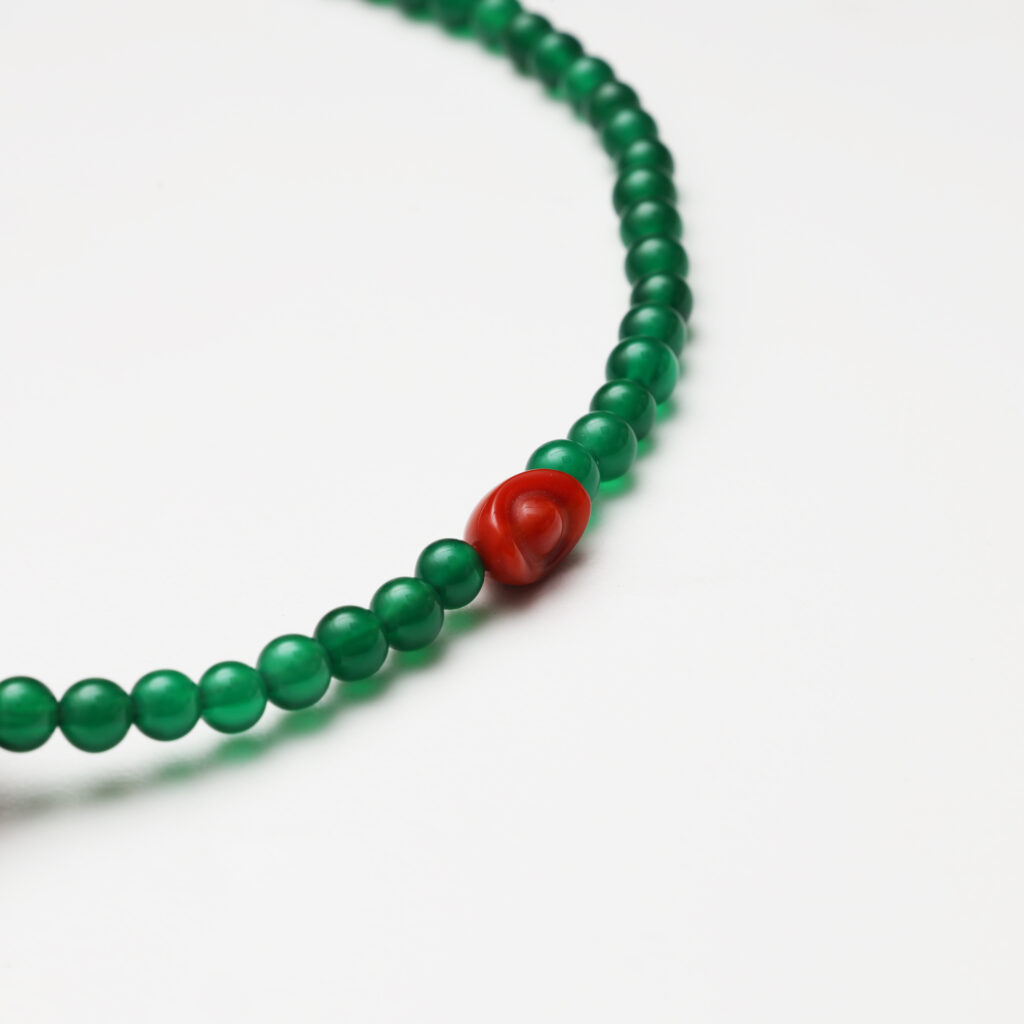
The Eastern Heritage necklace is 41cm long and weighs 25g. Its composition combines 6mm green agate beads with a 16mm cinnabar accent and an 8×12mm Southern Red Agate yuanbao detail. Together, these elements create a clear visual hierarchy: green forms the main color field, while red introduces smaller focal points.
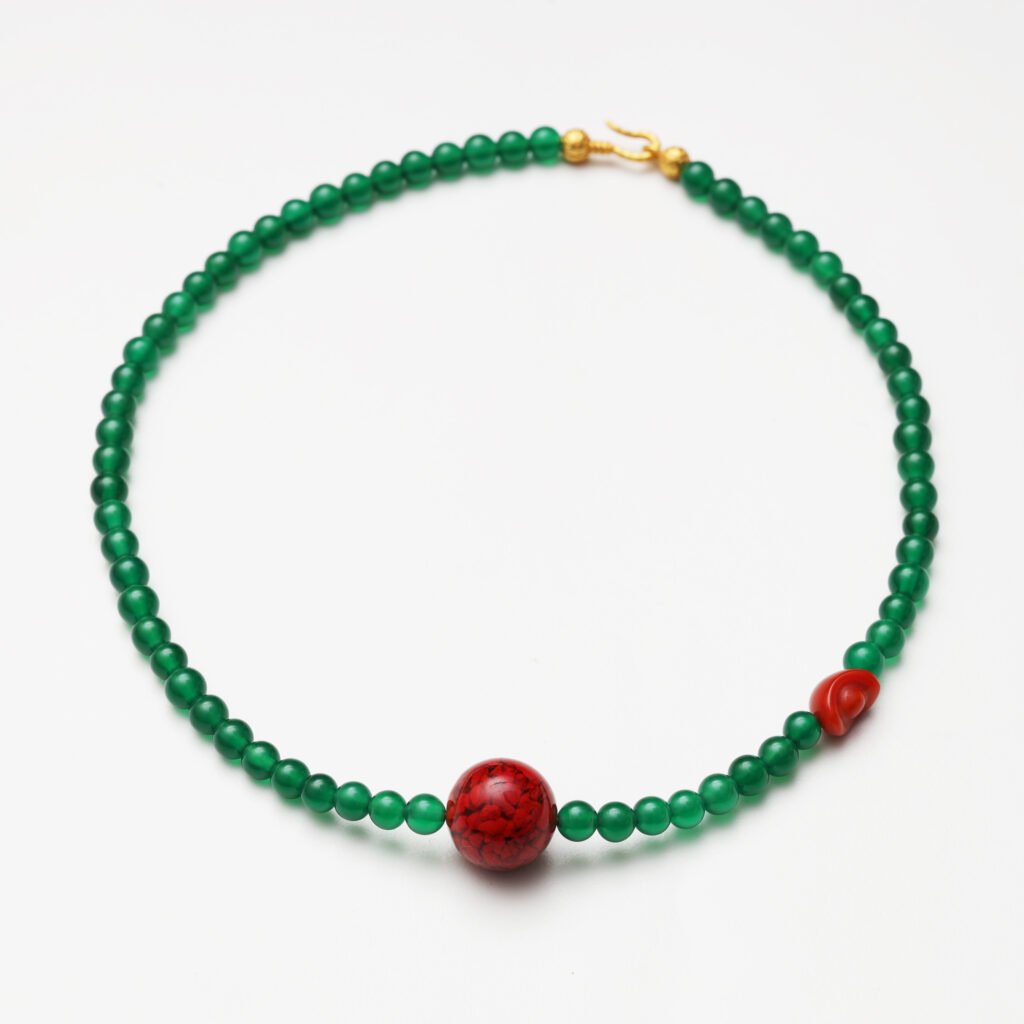
Gold-tone details also make the necklace easy to coordinate visually with simple gold-tone chains or pendants. Rather than matching every material exactly, repeating a similar metal tone can help separate necklace styles feel more connected when worn together.
How to Layer Gemstone Necklaces
1. Start With Different Necklace Lengths
Good necklace layering usually begins with visible spacing. If two necklaces sit at almost exactly the same level, their pendants and chains can visually compete and may overlap more easily.
At 41cm, the Eastern Heritage necklace can work as the shorter layer in a two-necklace combination. Try pairing it with a longer, visually lighter necklace — for example, a fine chain or pendant around 50–60cm. The difference in length creates breathing room and allows the gemstone necklace to retain its own shape around the neckline.
The exact spacing will depend on your neckline, body proportions, and the design of the second necklace, so use the measurements as a starting point rather than a strict rule.
2. Choose One Visual Focal Point
Layering becomes easier when one necklace leads and the others support it. If your gemstone necklace already combines several colors or contains a distinctive pendant, pair it with something simpler rather than adding another equally detailed statement piece.
For the Eastern Heritage necklace, the red yuanbao detail can act as the focal element. A slender gold-tone chain, a small pendant, or another understated necklace can add depth without competing with the green agate and red accents.
This approach is especially useful when learning how to layer gemstone necklaces: instead of trying to coordinate every stone and pendant at once, decide which piece should attract attention first.
3. Mix Gemstone Colors With a Clear Palette
Gemstone colors do not need to match perfectly. A more useful approach is to choose one dominant color and let the others work as accents.
The Eastern Heritage necklace combines forest green, red, and warm gold tones. When styling a palette like this, you can let green remain dominant while treating the cinnabar and Southern Red Agate as smaller red accents. A simple gold-tone second layer can then connect the composition without introducing another strong color.
If you want to add another gemstone necklace, look for a piece that repeats one part of the existing palette or introduces a quieter neutral tone. This helps layered gemstone necklaces feel collected rather than crowded.
4. Balance Pendant Size and Visual Weight
Length is only part of necklace layering. Pendant size and overall visual weight matter too.
If one necklace already contains a recognizable focal detail, keep the second pendant smaller or position it clearly below the first. The 8×12mm Southern Red Agate yuanbao gives the Eastern Heritage necklace a distinct focal point, so a secondary layer does not need another large decorative element.
For a cleaner look, try pairing a gemstone necklace with a fine chain, tiny disc, small geometric pendant, or another restrained design. This creates contrast between texture-rich gemstones and a simpler second layer.
5. Use Metal Tone to Connect Different Necklaces
Mixing different necklace styles becomes easier when they share one visual detail. Metal tone is one of the simplest ways to create that connection.
If your gemstone necklace includes warm gold-tone details, adding a fine gold-tone chain can make the combination feel intentional even when the two necklaces use very different shapes or materials. You do not need every element to match — repetition of one detail is often enough.
Gemstone Necklace Layering Ideas for Everyday Outfits
With an Open-Collar Shirt
A 41cm necklace naturally draws attention toward the neckline of an open shirt. Wear it alone for a cleaner look, or add a longer fine chain or pendant that falls lower within the open space of the shirt.
Keeping the clothing relatively simple allows the gemstone colors to remain visible without competing with a busy print.
With Neutral Knitwear
Ivory, oat, charcoal, beige, and other neutral tones provide a calm background for green and red gemstones. Against a simple knit, the color contrast becomes part of the outfit rather than an isolated accessory detail.
For layering, try the gemstone necklace with one understated gold-tone chain. The difference in texture — smooth metal against natural stone — can create depth without requiring additional color.
With a Simple Dress
A solid-color dress gives a layered necklace combination more visual space. If the dress has a clean neckline, use the shorter gemstone necklace to frame the upper neckline and let a longer, lighter layer extend below it.
When the jewelry already contains multiple colors, keeping the clothing palette restrained can help the overall look stay balanced.
From Weekend to Dinner
A natural gemstone statement necklace can move easily between relaxed daytime styling and more polished evening looks. For daytime, wear it alone with a linen shirt, knit top, or simple dress. For dinner, add a fine gold-tone chain or a restrained pendant to create a little more dimension.
The difference does not have to be dramatic. Sometimes one additional layer is enough to change the balance of the entire look.
Two-Layer vs. Three-Layer Necklace Styling
If you are new to necklace layering, start with two pieces. A shorter gemstone necklace plus one longer, lighter necklace is usually easier to balance and gives each piece enough visual space.
For three layers, increase the spacing gradually and avoid using three equally strong focal points. One practical formula is:
- First layer: a shorter gemstone necklace that establishes the main color palette.
- Second layer: a simple chain or small pendant that adds separation.
- Third layer: a longer pendant or minimal necklace that extends the vertical line.
If the result begins to feel crowded, remove one layer rather than adding more. Successful layering is usually about proportion and spacing, not the number of necklaces.
Gifting a Gemstone Necklace
A colorful gemstone necklace can also make a thoughtful gift because it can be worn in more than one way — alone as a focal piece or incorporated into an existing necklace collection.
The Eastern Heritage necklace is available with Standard Box or Luxury Box packaging. When choosing it as a gift, consider how the recipient usually wears jewelry: someone who prefers minimal pieces may enjoy wearing it alone, while someone who already layers chains and pendants can use its green, red, and gold palette as a starting point for new combinations.
Frequently Asked Questions
What necklace lengths work best for layering?
Layered necklaces usually look more balanced when each piece sits at a visibly different level. Start with a shorter necklace near the collarbone, then add a longer chain or pendant. The ideal spacing depends on the necklace designs and your neckline, so treat length recommendations as a flexible starting point.
Can you layer different gemstone colors together?
Yes. Try choosing one dominant gemstone color and using the others as accents. You can also connect different stones through a shared metal tone. Green, red, and gold, for example, can form a cohesive palette when paired with relatively simple clothing.
How do you layer necklaces without making them look too busy?
Choose one focal necklace and keep the other layers visually lighter. Different lengths also create separation between pendants and gemstones. If several pieces all have large pendants, strong colors, or similar lengths, removing one layer can often create a more balanced result.
What can I layer with a 41cm gemstone necklace?
A 41cm necklace can work well as the shorter layer in a two-piece combination. Try adding a longer fine chain or small pendant necklace so the two pieces occupy different levels and each has its own visual space.
Can I mix gemstone necklaces with gold chains?
Yes. A simple gold-tone chain can create visual space between colorful gemstone pieces while repeating the warm metal details already present in the jewelry. Keeping the chain relatively understated also allows the natural gemstones to remain the focal point.
The Yuanbao Detail: Cultural Inspiration Without Overstatement
The yuanbao form has long been associated with abundance and good fortune in Chinese visual culture. In the Eastern Heritage necklace, the Southern Red Agate yuanbao brings that recognizable shape into a contemporary gemstone design.
Its meaning can be appreciated as cultural and design inspiration rather than a promise of any metaphysical effect. For styling, it also gives the necklace a distinct focal detail — one that can remain visible when the surrounding layers are kept simpler.
Build Your Own Gemstone Necklace Layer
The easiest way to begin gemstone necklace layering is to work with what you already wear. Start with one necklace you want to emphasize, add a second piece at a clearly different length, and then look at color, pendant size, and metal tone as connecting elements.
For a colorful starting point, the Eastern Heritage · Green Agate, Cinnabar & Southern Red Agate Yuanbao Necklace combines a 41cm length with forest-green agate, red accents, and warm gold-tone details — giving you several elements to build around without requiring a complicated stack.
Explore more natural gemstone necklaces and experiment with different lengths, colors, and pendant proportions to create a combination that feels personal to you.